




Stiffness in Joints: Is It Normal Ageing or a Sign of Arthritis?
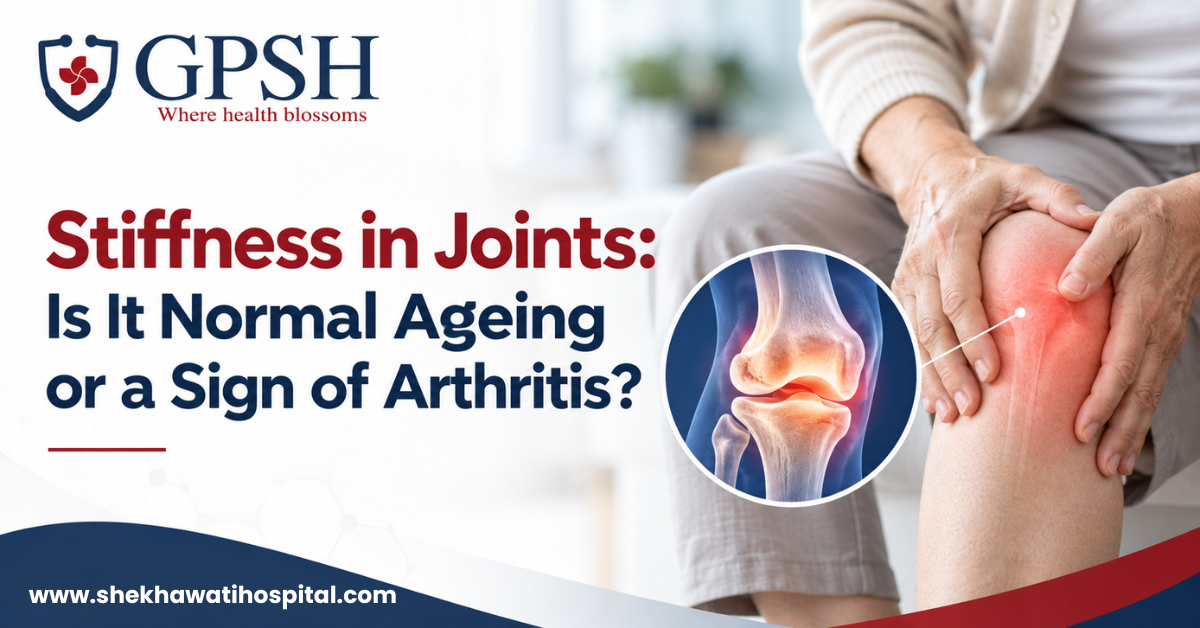
Quick Answer: Stiffness in joints is common with ageing, especially after rest or in the morning, and it usually eases within 10 to 20 minutes of moving. If stiffness lasts longer than 30 to 60 minutes, returns daily, or comes with swelling, warmth or worsening pain, it may be a sign of arthritis and should be checked by a doctor.
You get out of bed and your knees feel locked. Your fingers feel tight when you open a jar. After a long drive, standing up takes real effort. Almost everyone notices stiffness in joints at some point, and the usual worry is whether it is just age or something more serious.
This guide explains why joints stiffen, how to tell normal ageing from arthritis, and when to get medical help.
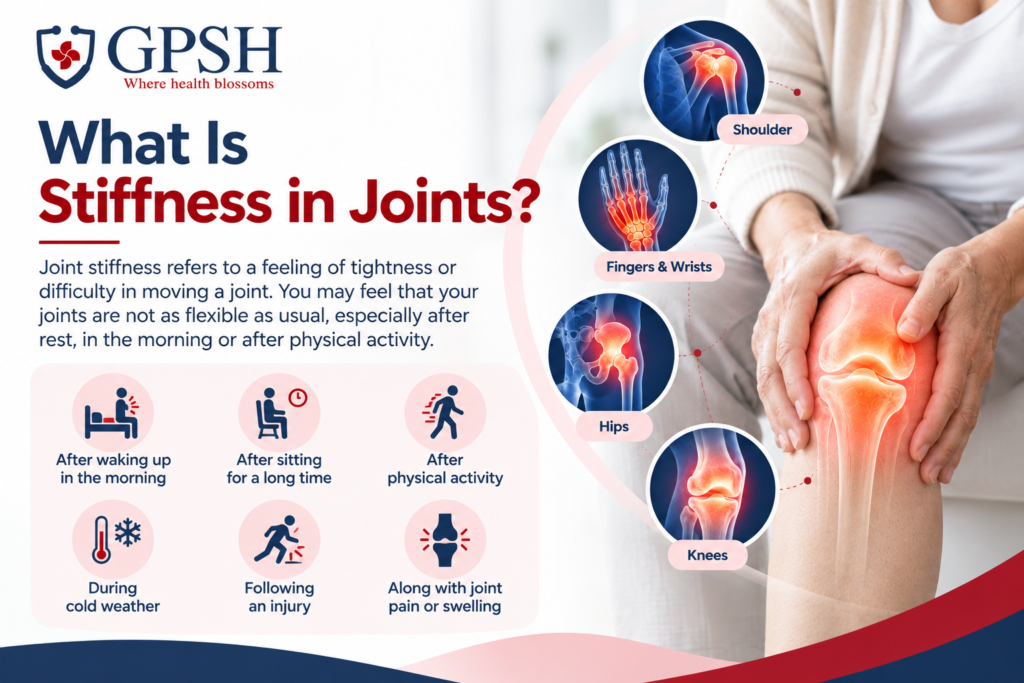
Stiffness in joints is a tight, “stuck” feeling that makes a joint hard to bend or straighten fully. It can affect the knees, hips, fingers, shoulders, neck or spine. It may come with pain, but it can also appear on its own.
Stiffness is a symptom, not a disease. It can come from simple causes such as inactivity or from conditions such as arthritis.
Joints are built for smooth movement. The ends of your bones are covered with cartilage, a slippery cushion, and a lubricating fluid called synovial fluid fills the joint space. Over the years:
The result is that joints do not glide as easily as they once did. This age-related stiffness is usually mild and improves once you start moving, because movement spreads fluid through the joint.
Morning stiffness is one of the most useful clues. Your joints stay still while you sleep, so some tightness on waking is expected.
| Feature | Normal Ageing | Possible Arthritis |
|---|---|---|
| Duration of morning stiffness | 10–20 minutes | 30–60 minutes or longer |
| Effect of movement | Improves quickly | Improves slowly or only partly |
| Pain | Mild, manageable | Persistent or increasing |
| Swelling, warmth or redness | Usually absent | Often present |
| Pattern | Occasional | Daily, may affect several joints |
| Daily activities | Rarely affected | Walking, dressing and gripping become difficult |
If several of these sound familiar, don’t wait it out.
The most common type, caused by gradual wear of cartilage. It typically affects the knees, hips, spine and finger joints. Stiffness appears after rest and eases with movement, but pain on walking or climbing stairs often builds over time.
An autoimmune condition in which the body’s immune system attacks the joint lining. It often causes prolonged morning stiffness (an hour or more), swelling in the small joints of the hands and feet, and symmetrical symptoms. Early treatment is important to prevent permanent joint damage.
Caused by excess uric acid forming crystals in a joint. It tends to cause sudden, severe pain, swelling and redness, often in the big toe, though other joints can be affected.
Conditions such as ankylosing spondylitis (affecting the spine) and psoriatic arthritis can also cause stiffness, especially after rest or in the early morning.
Not every case is arthritis. Other common contributors include:
A doctor will begin with your history: when the stiffness occurs, how long it lasts, and which joints are involved. This is followed by a physical examination of movement, swelling and tenderness. Depending on findings, tests may include:
Early diagnosis matters because many forms of arthritis can be controlled far better when treated early.
For mild, age-related stiffness, these habits help:
These steps help with ageing-related stiffness but don’t replace medical care if arthritis is suspected.
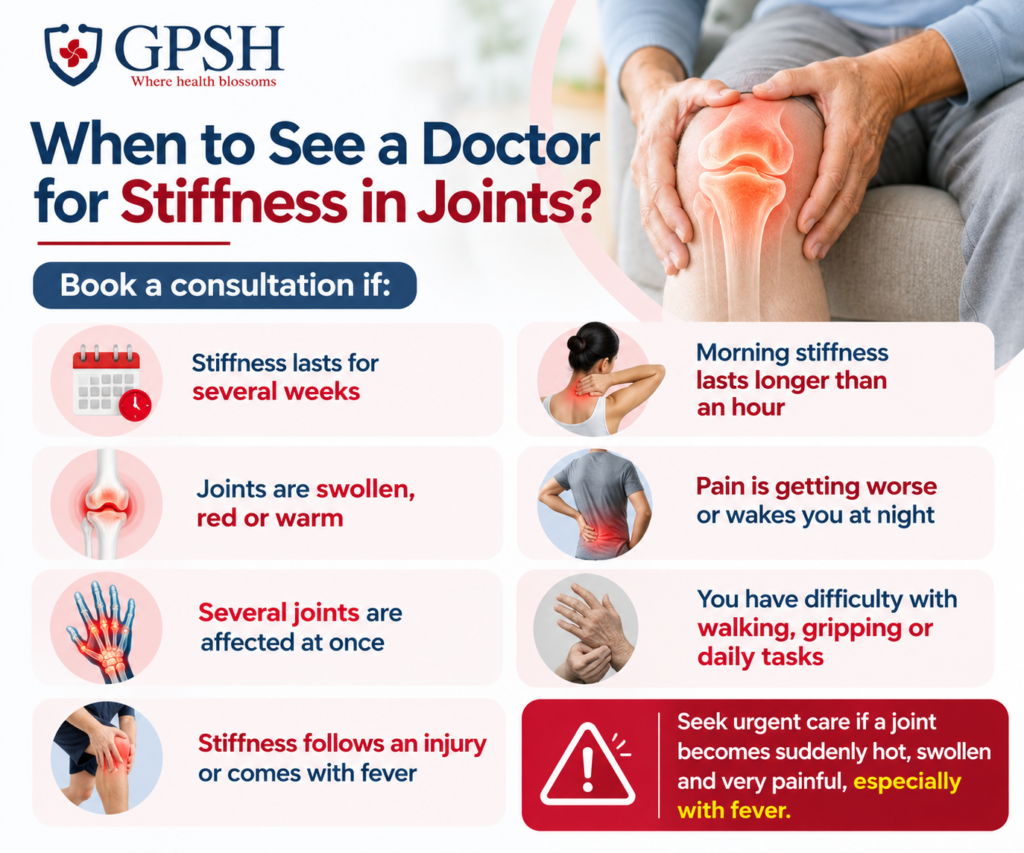
Book a consultation if:
Seek urgent care if a joint becomes suddenly hot, swollen and very painful, especially with fever.
If you’re searching for the Best Hospital in Jaipur for joint and bone concerns, an early evaluation can make a real difference. Persistent stiffness should be assessed properly rather than treated with guesswork or repeated painkillers. You can learn more about the team and facilities at Shekhawati Hospital in Jaipur, where patients can get examined, diagnosed and guided on a suitable treatment plan, from lifestyle changes and medication to physiotherapy and advanced options where needed.
Mild stiffness in joints that fades with movement is usually a normal part of ageing. Stiffness that is prolonged, painful, swollen or spreading deserves attention, because it may signal arthritis. The sooner it is identified, the more joint function you can protect. Listen to your body, and don’t let “it’s just age” delay a proper check-up.
Normal morning stiffness typically lasts 10 to 20 minutes. If it lasts more than 30 to 60 minutes on most days, see a doctor.
No. It can result from ageing, inactivity, old injuries, weight gain, poor posture or vitamin deficiency. It becomes a concern when it is persistent, painful or accompanied by swelling.
Yes. Joints can feel tight or less flexible without pain, particularly after rest or in the early stages of a joint problem.
The knees, hips, fingers, wrists, shoulders, neck and lower back are most commonly affected.
Doctors commonly use blood tests such as ESR, CRP, rheumatoid factor and anti-CCP, along with X-ray, ultrasound or MRI, depending on the symptoms.
Many people notice more stiffness in cold weather, and it may feel worse in those with arthritis. Staying warm and active can help.
Mild stiffness often improves with regular exercise, stretching, heat therapy, weight control and a balanced diet. Persistent symptoms need medical evaluation.
Low vitamin D is a common cause and can lead to bone pain, muscle weakness and a feeling of stiffness.
Start with an orthopaedic specialist, who may refer you to a rheumatologist if an autoimmune or inflammatory condition is suspected.
Disclaimer: This article is for general awareness and is not a substitute for professional medical advice, diagnosis or treatment.