




Early Symptoms of Prostate Problems in Men: A Complete Guide

The prostate is a small gland, roughly the size of a walnut, but the trouble it can cause is anything but small. Tucked just below the bladder, this gland plays a quiet but essential role in male reproductive health — until something goes wrong. And when it does, the signs often show up gradually, easy to dismiss as “just getting older” or “too much coffee.”
Recognizing the early symptoms of prostate in men can make the difference between a simple treatment plan and a complicated one. This guide breaks down what to watch for, why it happens, and when it’s time to see a specialist.
Before diving into symptoms, it helps to understand the gland itself. The prostate produces the fluid that nourishes and transports sperm. It sits around the urethra — the tube that carries urine out of the body — which is exactly why prostate issues so often show up as urinary problems. When the gland swells, becomes inflamed, or develops abnormal cells, it presses on or affects this tube, disrupting the entire urinary system.
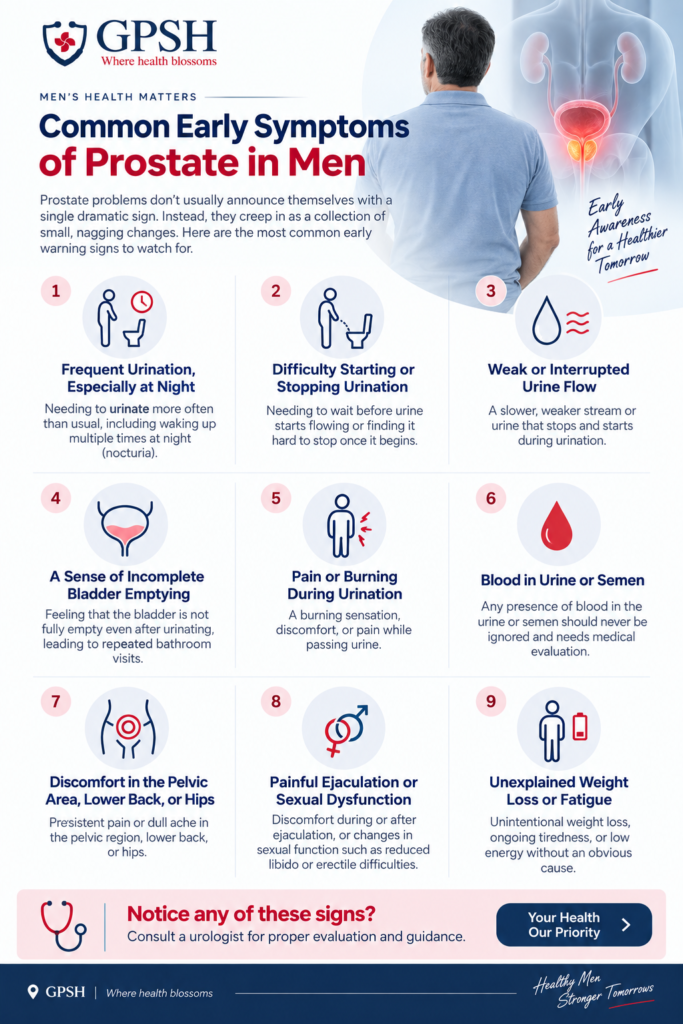
Prostate problems don’t usually announce themselves with a single dramatic sign. Instead, they creep in as a collection of small, nagging changes. Here are the ones doctors most commonly flag as early red flags.
Waking up two or three times a night to use the bathroom (a condition called nocturia) is one of the earliest and most common signs of an enlarged or irritated prostate. During the day, you might also notice you’re heading to the restroom far more often than usual.
A hesitant start, a weak stream, or dribbling at the end of urination are classic signs that the prostate is pressing against the urethra. Many men describe it as needing to “wait” before urine flows, even when the urge feels urgent.
Instead of a steady stream, the flow may start and stop several times, or feel noticeably weaker than it used to. This happens because the enlarged gland narrows the passage urine has to travel through.
Feeling like your bladder is never fully empty, even right after urinating, is another common complaint. This can lead to more frequent bathroom trips and disrupted sleep.
While this symptom is more commonly associated with prostatitis (inflammation or infection of the prostate), it shouldn’t be ignored regardless of the cause. Burning, stinging, or discomfort while urinating warrants a medical check.
Even a small amount of blood is a signal your body shouldn’t be ignored. It doesn’t always indicate something serious, but it always deserves prompt evaluation.
Persistent, unexplained ache in the pelvis, lower back, hips, or upper thighs can sometimes be linked to prostate issues, particularly when other urinary symptoms are also present.
Changes in sexual function — including pain during ejaculation, reduced libido, or erectile difficulties — can sometimes trace back to prostate inflammation or enlargement.
While less specific, sudden fatigue or weight loss combined with the urinary symptoms above should never be brushed aside, as they can occasionally point to more advanced prostate conditions.
Here’s the tricky part: most of these symptoms develop slowly, over months or even years. Many men attribute them to aging, stress, or lifestyle factors like diet and hydration. Others feel embarrassed discussing urinary or sexual symptoms, even with a doctor. Unfortunately, this delay in seeking care is exactly what allows treatable conditions to progress into more complex ones.
Several conditions can trigger these early symptoms, including:
Age, family history, obesity, sedentary lifestyle, and certain underlying health conditions like diabetes can all increase the risk.
A good rule of thumb: if urinary changes last more than two weeks, or if you notice blood in urine/semen, pelvic pain, or sudden sexual dysfunction, it’s time to consult a urologist. Early diagnosis through simple tests — a physical exam, urine test, PSA blood test, or ultrasound — can quickly clarify what’s going on and rule out anything serious.
If you’re searching for reliable, experienced care, choosing the Best Hospital in Vidhyadhar Nagar Jaipur can make the diagnostic and treatment journey far smoother. Shekhawati Hospital offers specialized urology consultations, advanced diagnostic facilities, and experienced doctors who understand how to identify and manage prostate concerns at every stage — from the first symptom to complete recovery.
While medical evaluation is essential, certain habits can support a healthy prostate:
Q1. At what age do prostate problems usually start?
Prostate-related symptoms most commonly begin appearing after age 40, with risk increasing significantly after 50. However, prostatitis can affect younger men too.
Q2. Can early prostate symptoms be reversed?
Yes, in many cases. Conditions like BPH or prostatitis, when caught early, can be managed effectively with medication, lifestyle changes, or minimally invasive procedures — often avoiding the need for surgery.
Q3. Is frequent urination at night always a sign of prostate trouble?
Not always — it can also stem from diabetes, excessive fluid intake, or sleep disorders. However, if it’s a new and persistent pattern, a prostate check is a wise first step.
Q4. Does an enlarged prostate mean cancer?
No. Most enlarged prostates are due to BPH, a non-cancerous condition. However, only proper testing (like a PSA test) can confirm whether cancer is a factor.
Q5. What tests are used to diagnose prostate problems?
Common diagnostic tools include a digital rectal exam (DRE), PSA blood test, urine analysis, and ultrasound imaging. Your doctor may recommend one or a combination based on your symptoms.
Q6. Can diet really affect prostate health?
Yes. Diets high in processed foods and red meat are linked to higher prostate risk, while diets rich in vegetables, fiber, and healthy fats appear protective.
The early symptoms of prostate problems are subtle, but your body rarely stays silent for long. Frequent bathroom trips, a weakening stream, or unexplained pelvic discomfort are worth paying attention to — not panicking over, but not ignoring either. The earlier these signs are evaluated, the more treatment options remain on the table, and the smoother the road to recovery.
If any of these symptoms sound familiar, don’t wait for them to worsen. A timely consultation with an experienced urology team can offer clarity, peace of mind, and a clear path forward.
Medical Disclaimer: This article is intended for general educational purposes and should not be considered a substitute for professional medical diagnosis or treatment. Prostate symptoms can have multiple causes. Consult a qualified doctor for personalised medical advice.